Batik, hollowed-out printing and tie-dyeing are called the three printing techniques in ancient China.
Batik is popular among the Gelao, Yao, Miao and other ethnic minorities. Among them, Miao batik is the most representative. Guizhou, as the province with the largest population of Miao nationality and the largest living area in China, has a long history of batik technology, which has formed a unique artistic style and geographical characteristics of artworks. Through the exploration of batik technology and artistic design of Miao nationality in Guizhou, we can draw a vivid picture of the inheritance of Miao nationality culture in Guizhou.
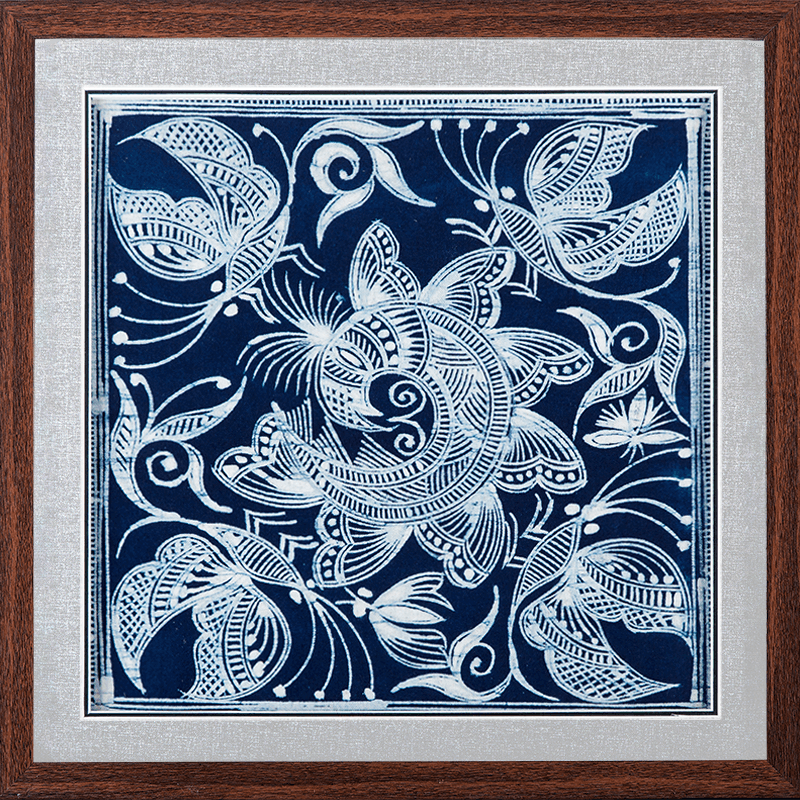
Perhaps everyone has seen one or more batik works, but how is batik created? Not everyone can say exactly.
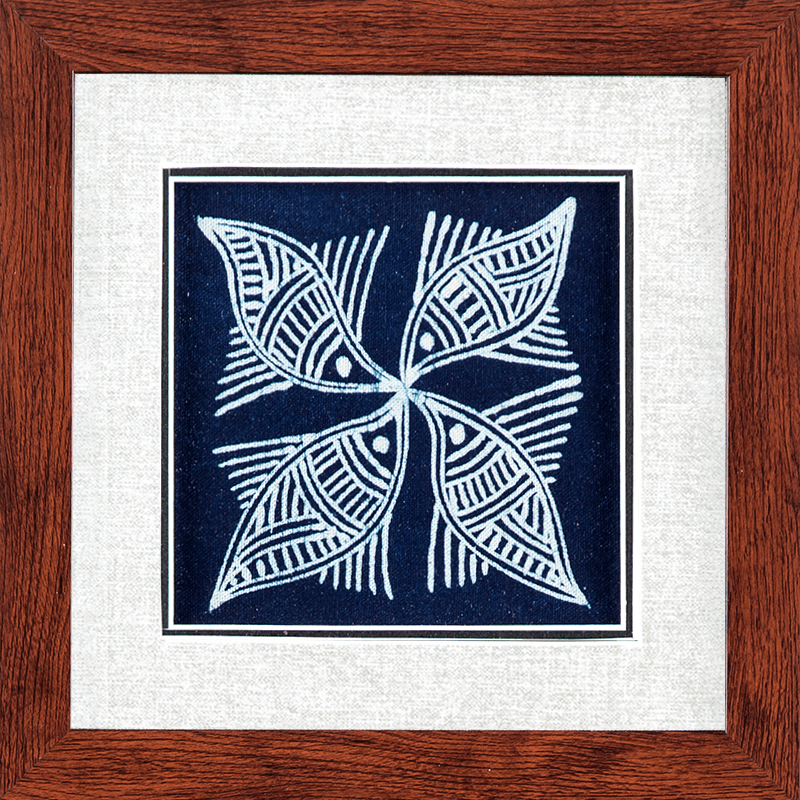
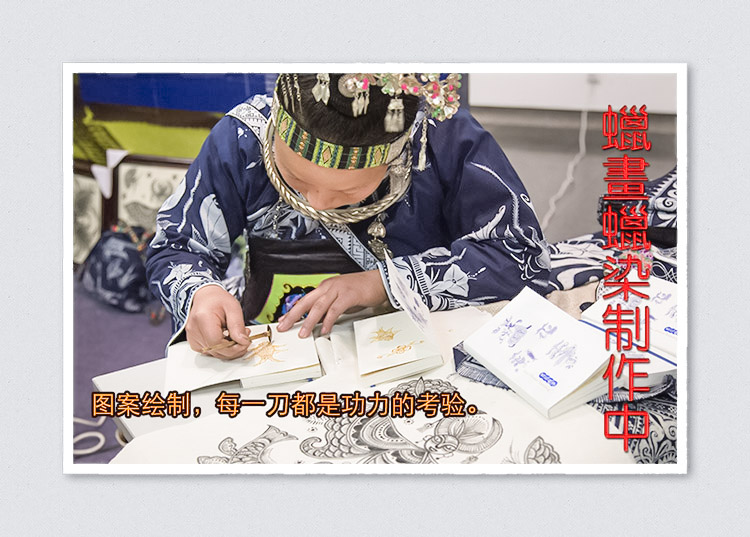
According to the most common production process, batik is to put the embryo cloth (usually hand-woven cloth) in the melted wax liquid, wait for it to cool and solidify, then use a wax knife to melt the wax to paint flowers, and then use indigo pigment made of natural materials to dip the embryo cloth after painting flowers, the embryo cloth will appear blue flowers on white background, or white flowers on blue background. Simply put, it is through waxing-painting-dyeing-dewaxing-rinsing and other processes to create a variety of patterns, unique works.
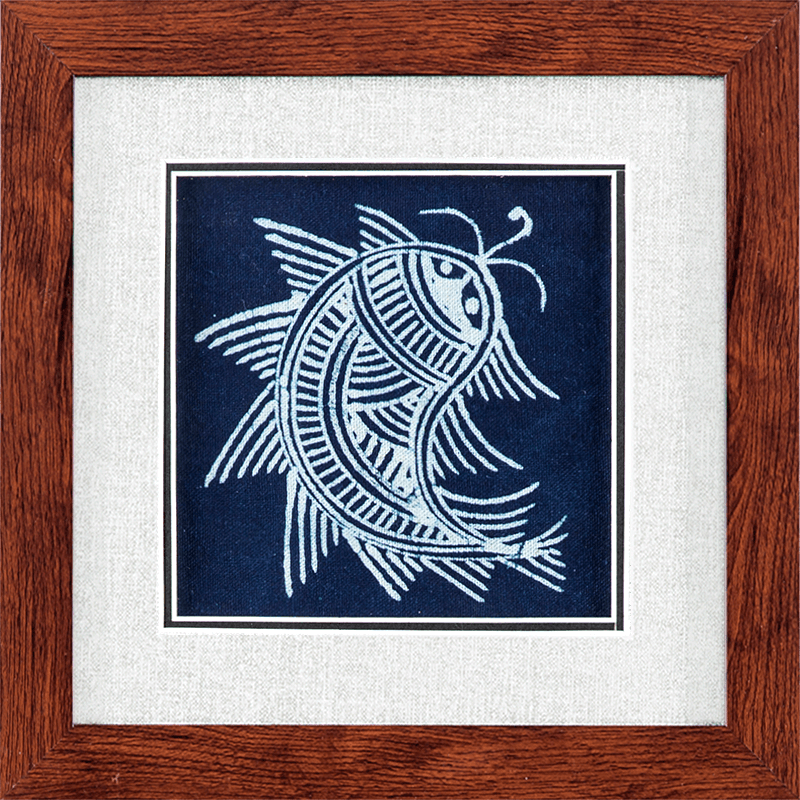 The biggest characteristic of batik printing and dyeing process is to use yellow wax as resist, which can produce unexpected cracks in the process of dip dyeing, forming a unique pattern called "ice pattern". Its tone is simple and elegant, and its style is simple and generous, or coarse or fine texture, which establishes the unique status of batik artworks.
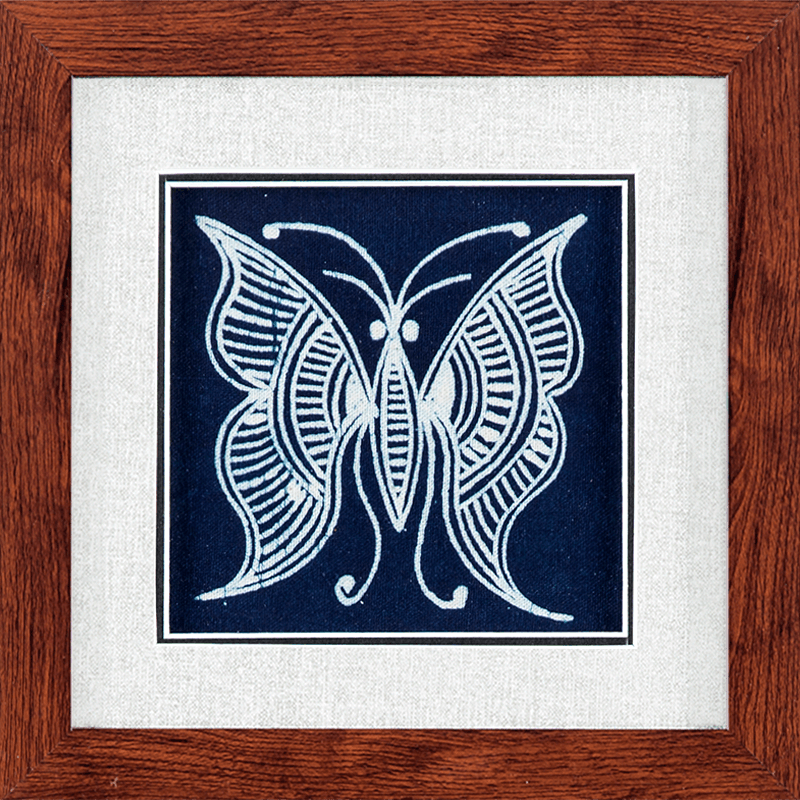
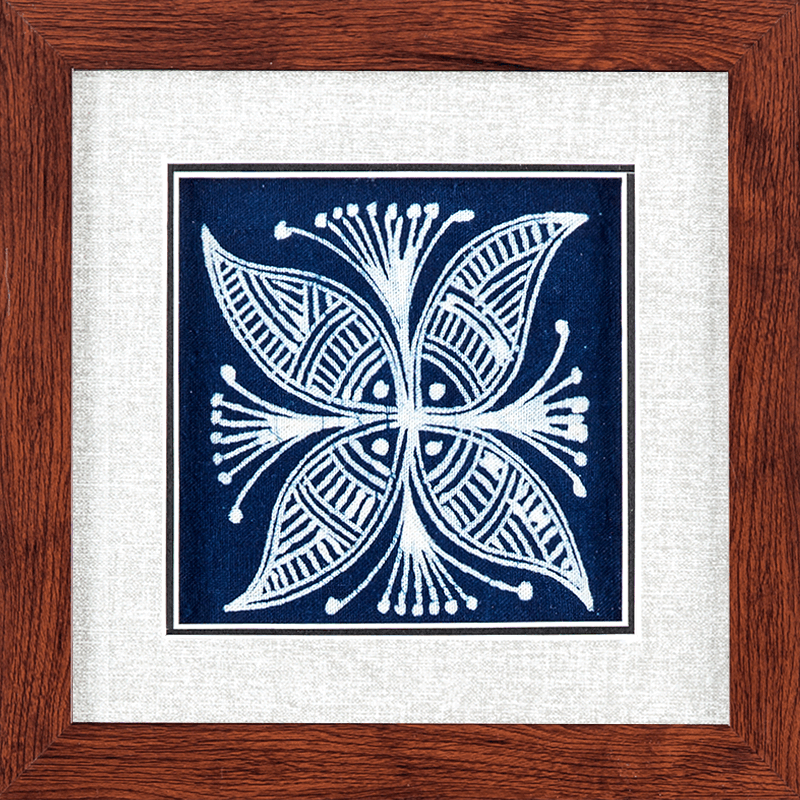 Natural patterns and symmetrical geometric textures are the two most commonly used patterns in the traditional batik paintings of Miao nationality in Guizhou.
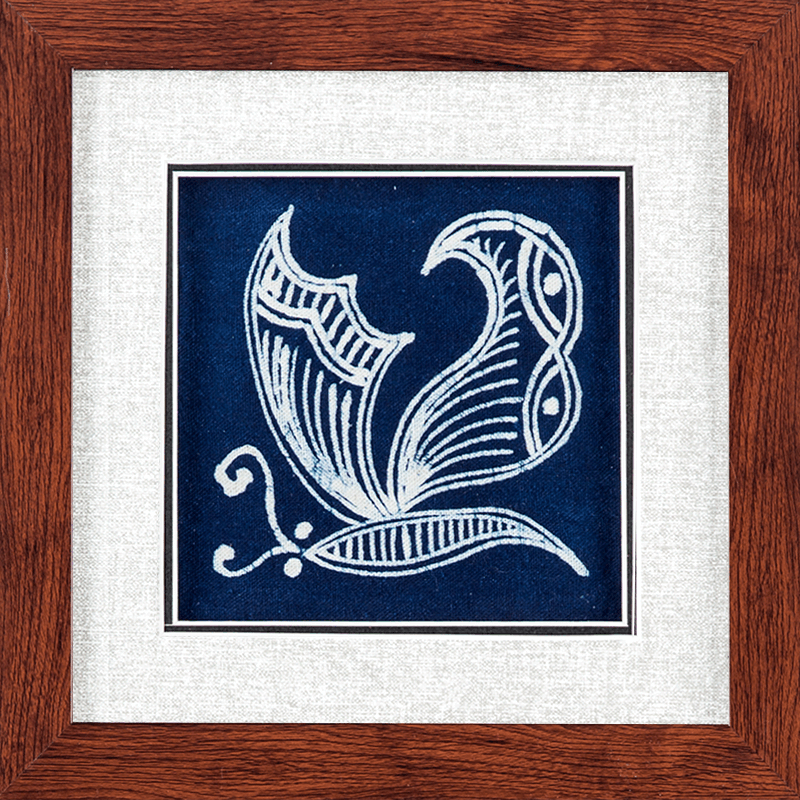 The natural patterns record the real natural world of Miao people, especially the animals and plants, which vividly show the beauty around the creators, which is the concrete expression of batik art.
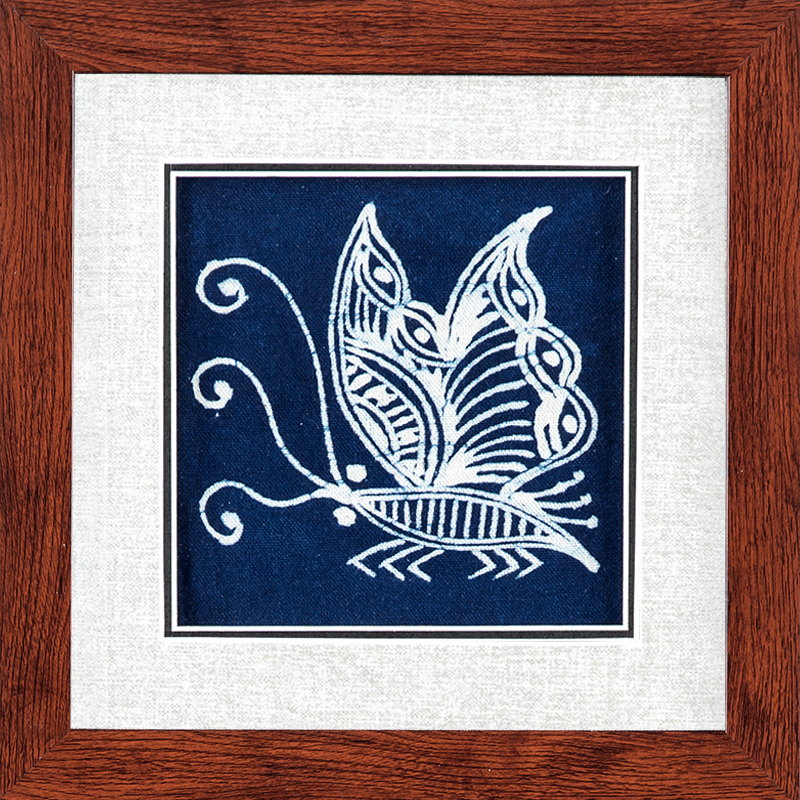 The artistic value of batik is not only the beautiful world she shows, but also the application of geometric patterns to express the auspicious and beautiful flowers, birds, fish and insects and natural customs in the natural world in abstract shapes, and to express the long cultural heritage of Miao compatriots with exaggerated and delicate abstract patterns.
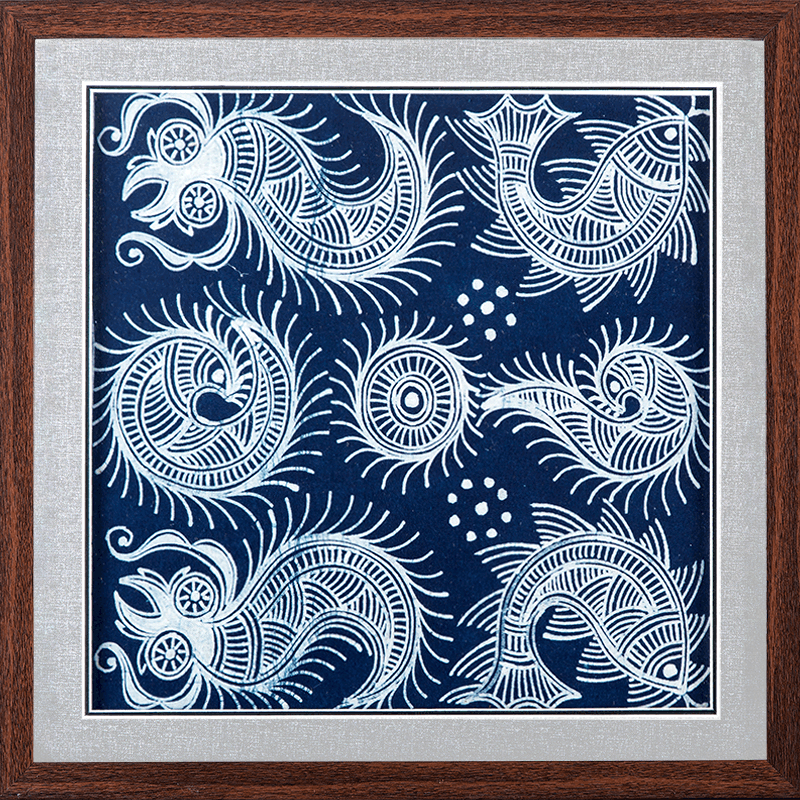
1.Dragon pattern
As a member of the big family of the Chinese nation, like most nationalities, the Miao nationality also regards the dragon as the totem of life. The dragon pattern is a very important pattern in Guizhou batik works. Unlike the Han nationality's dragon pattern, which emphasizes grandeur and dominance, the dragon pattern of Guizhou ethnic minorities shows a kind of intimacy with nature and human beings, a harmonious scene integrating all things and the universe. Miao batik dragon patterns change thousands, fish dragon, fish tail dragon, dragon, water dragon, silkworm dragon, leaf dragon, buffalo dragon and so on are all popular deformation. There are more silkworm-shaped and snake-shaped dragon patterns, abstract and interesting. 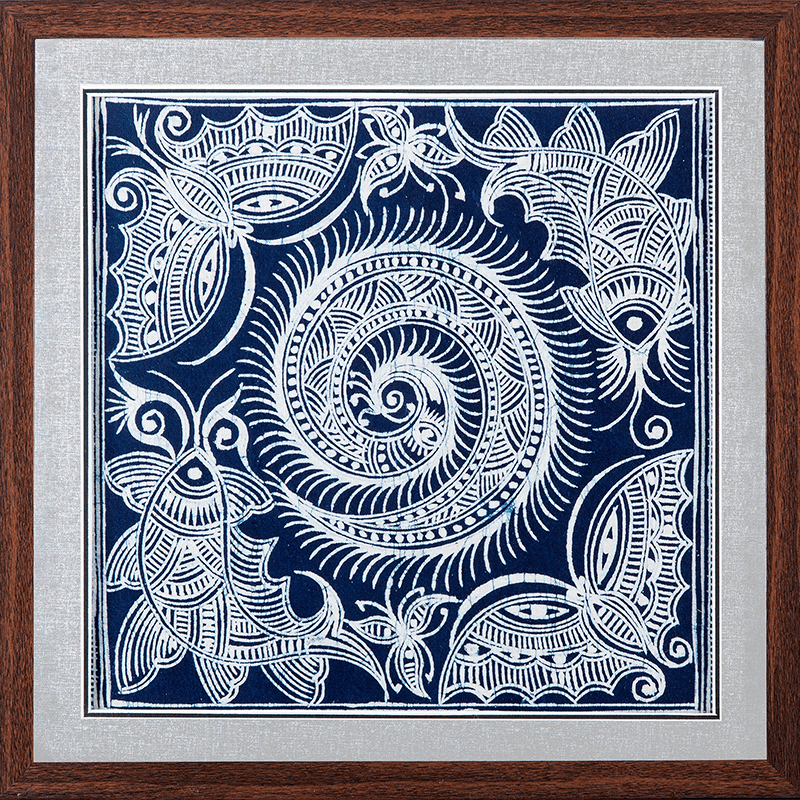
2.Cosmic mountain and river pattern
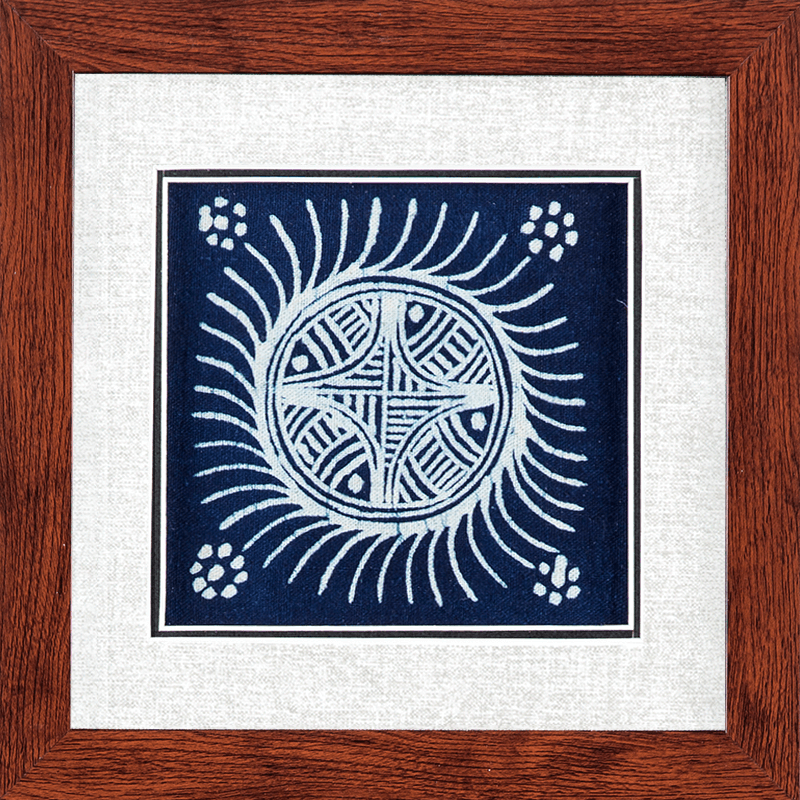
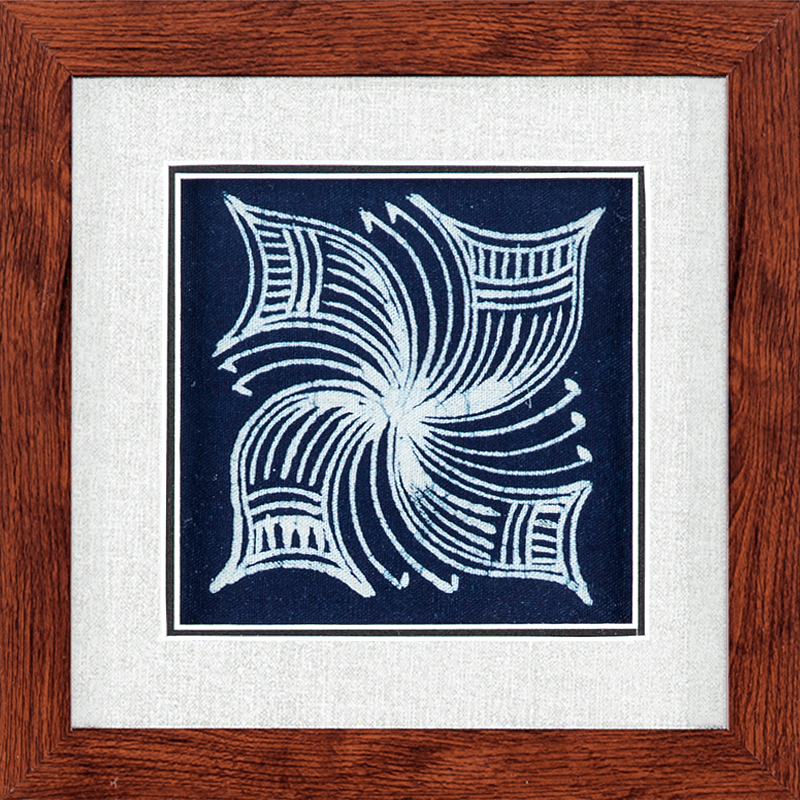
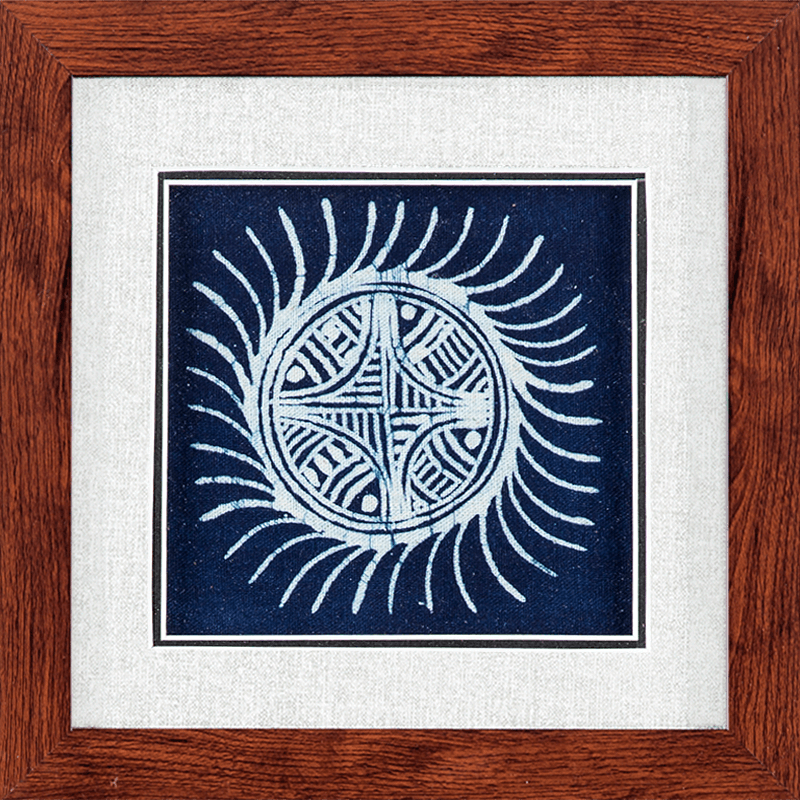
The universe is not only the observation of the distant unknown world, but also the imagination and philosophical thinking of all nationalities. Mountains and rivers are the natural environment on which human beings depend for survival, and also the material world inseparable from life. Orderly, well-arranged, formal description of the universe stars and natural mountains and rivers is not only awe of nature, but also explore the cultural connotation.Stars, mountains and rivers are sometimes the record and review of national history, especially the nine-winding river patterns. The pattern, quadrilateral, diamond, cross and other elements are arranged delicately and the composition is perfect, representing the beautiful world and the process of national migration, expressing nostalgia for hometown and praise for beautiful life.
3.floral pattern
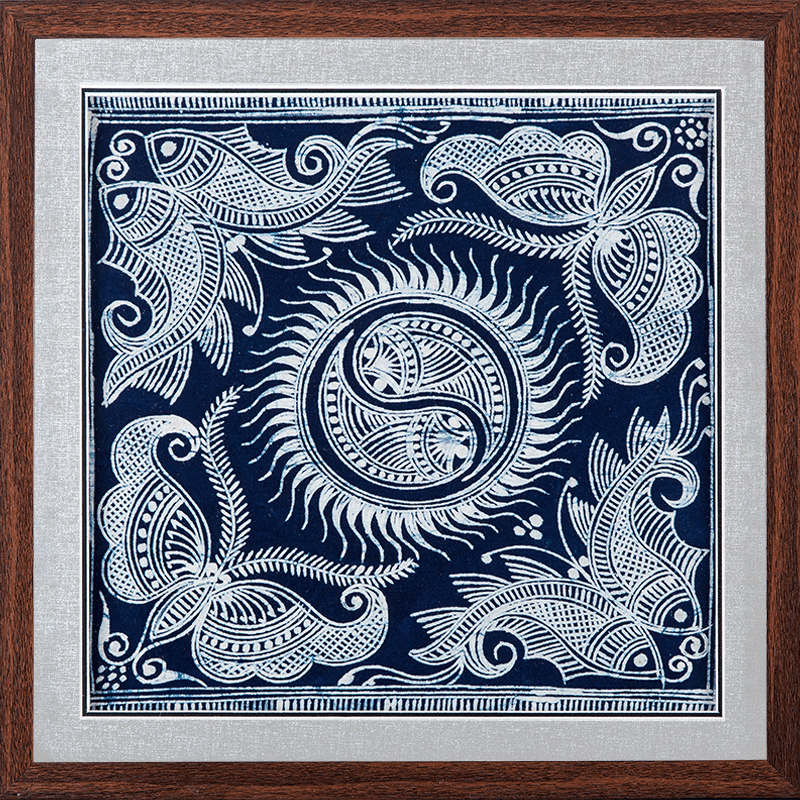
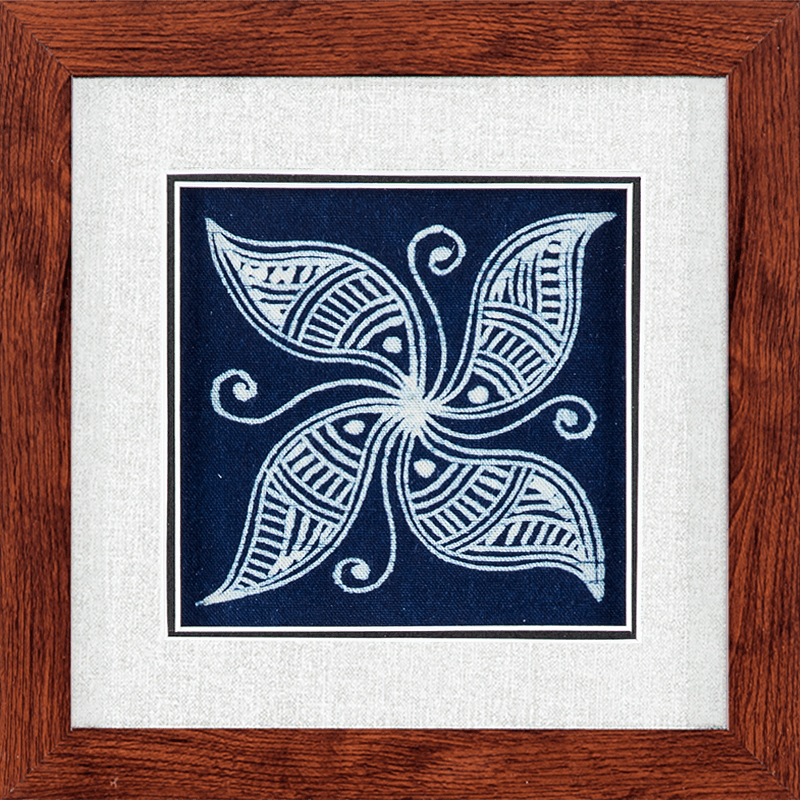
In Miao culture, flowers and plants have always been widely used as auxiliary patterns, not only frequently used in batik, but also widely used in Miao embroidery. Whether as the theme of a work or as an auxiliary pattern, it is a symbol of blessing and auspicious wealth. Many geometric patterns are also abstract from the deformation of flowers and plants patterns, fine and beautiful patterns highlight the Miao compatriots 'love for nature. _MG_4248edit-800px.png 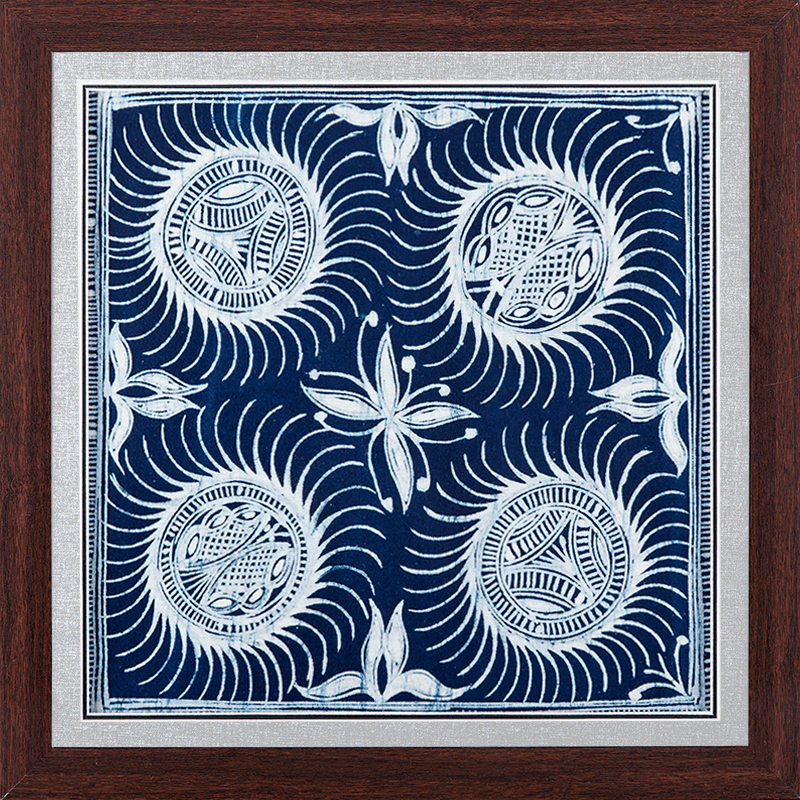
 4.Fish and bird
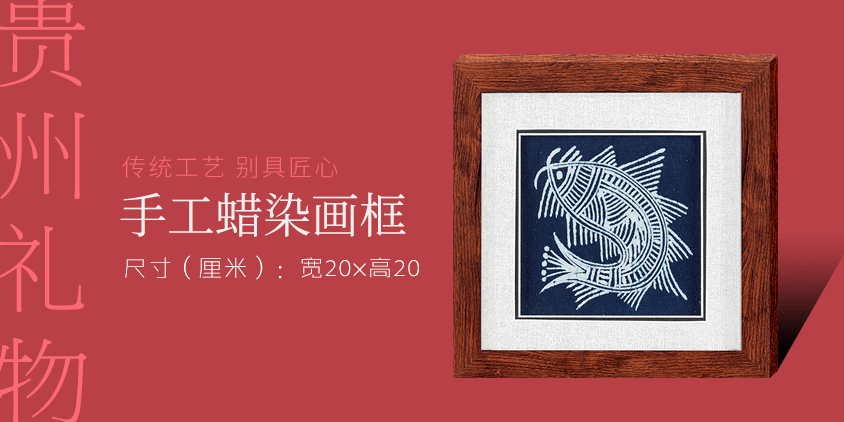
Fish and bird can be said to be the most used patterns in Guizhou Miao batik. The worship of fish reproductive ability makes fish patterns widely used in Miao art works, which is a symbol of many children and grandchildren. This is why fish are often used as an essential tribute in sacrifices. It can be seen from the batik works of Miao nationality in Guizhou that the belly of fish is usually very fat, and some fish belly has spots similar to fish roe, even small fish patterns.<span style="box-sizing:border-box;font-family:-apple-system, system-ui, "segoe ui", roboto, ubuntu, cantarell, "noto sans", sans-serif, blinkmacsystemfont,